Portfolio

Our projects & insights

Financial reporting projects and practical insights on Power BI, automation and better management decisions.

From Power BI Model to Fully Automated Financial Reporting in Microsoft Fabric

One master financial model, Dataflow Gen2 transformations and Fabric pipelines that automate the reporting process from source data to refreshed management dashboards.

View project →
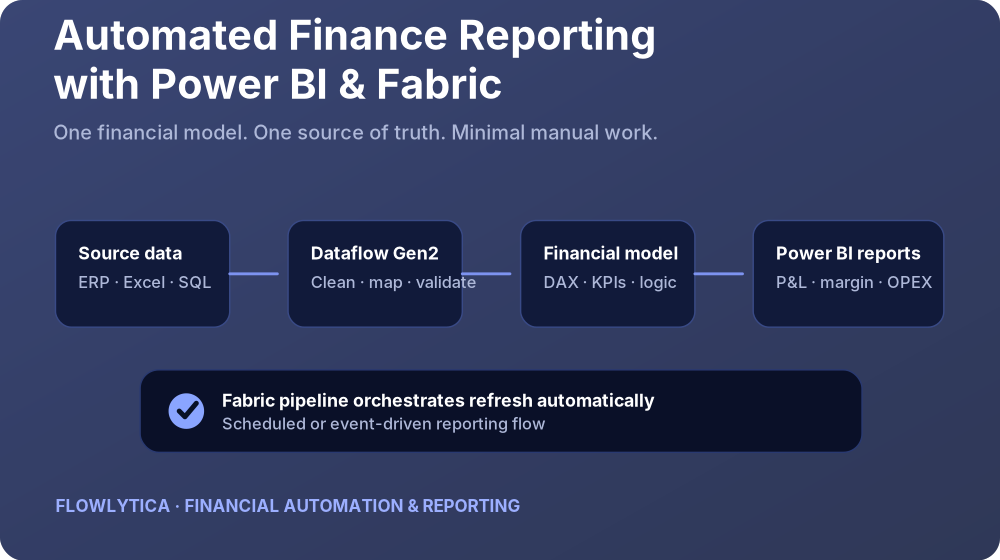
Automated finance reporting with Power BI and Microsoft Fabric

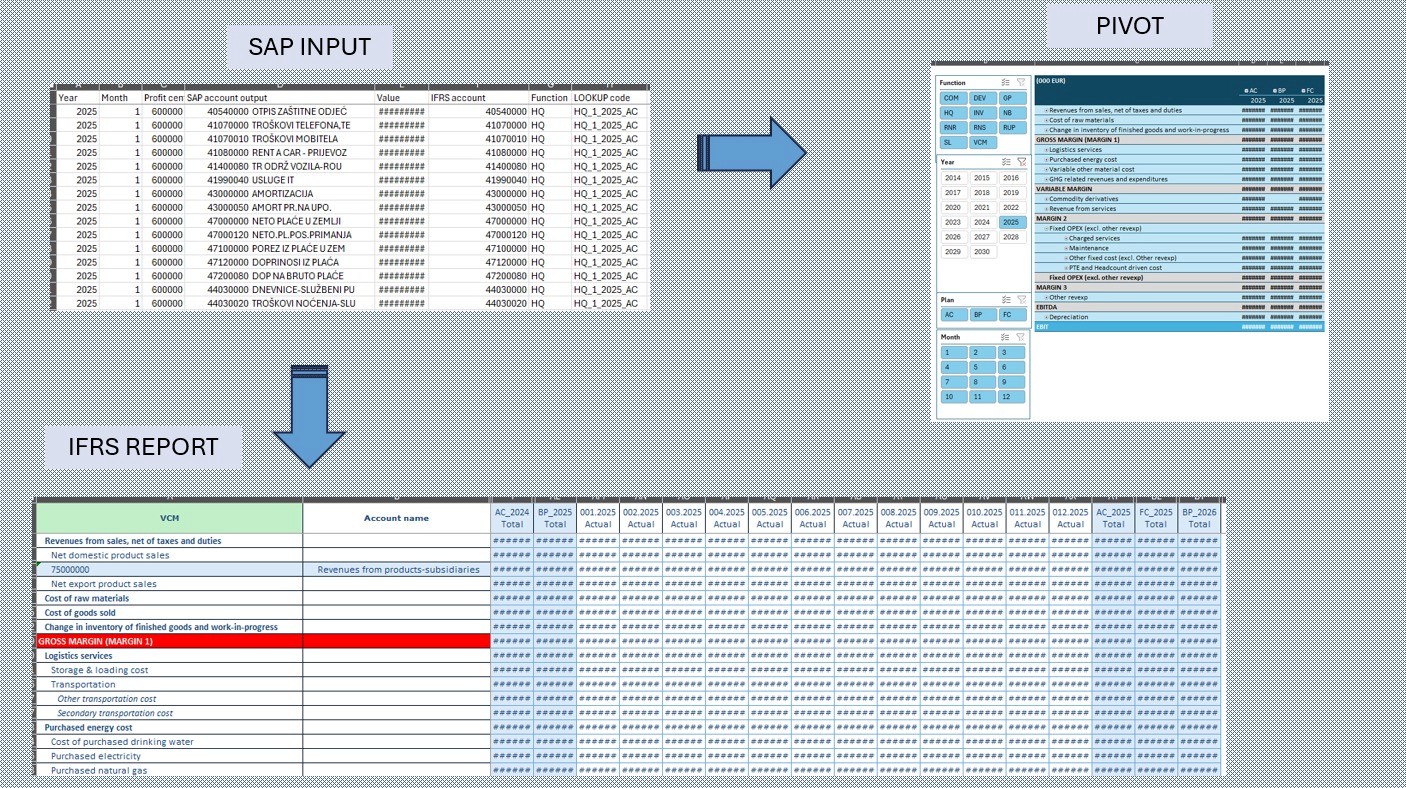
Transforming SAP Exports into a Clean Financial Database with Power Query

A repeatable finance data layer that cleans, maps and consolidates recurring SAP exports into analysis-ready tables for Excel and Power BI reporting.

View project →
SAP financial data transformed with Power Query

How Power Query Automates P&L, IFRS, and BI Reporting

Replacing repeated copy-paste work with one controlled transformation process that feeds recurring P&L, IFRS and Power BI reporting.

View project →
Power Query automated financial reporting workflow

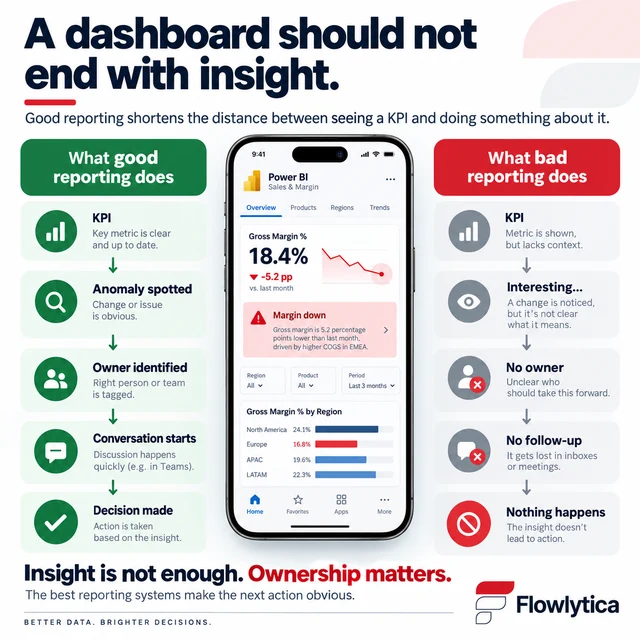
Power BI on a phone just became a little more useful for management.

A mobile contact link is useful. The bigger reporting lesson is to connect every important KPI to an owner and a next action.

Read article →
A dashboard should not end with insight: clear KPI ownership connects an anomaly to a conversation and a decision.

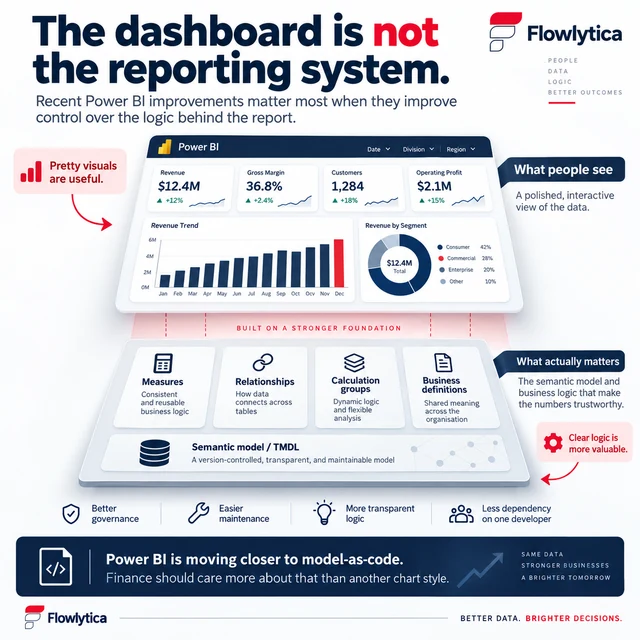
One of Power BI’s more important recent improvements has almost nothing to do with dashboards.

TMDL View makes the logic behind a report more visible. For finance, control over that logic matters more than another chart style.

Read article →
The dashboard is not the reporting system: measures, relationships, calculation groups and business definitions form its foundation.

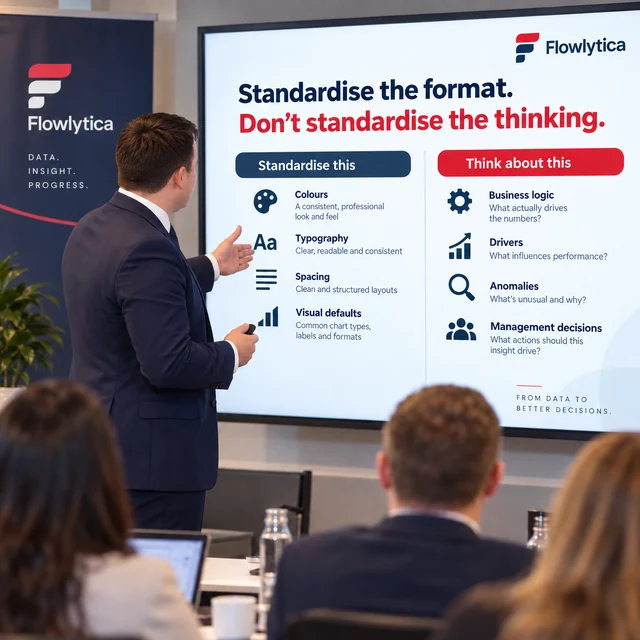
Power BI just made it easier to make reports look consistent.

The value of consistent themes is removing repeated design decisions, so finance can focus on the model, business logic and management’s questions.

Read article →
Flowlytica workshop: standardise the format, don’t standardise the thinking.

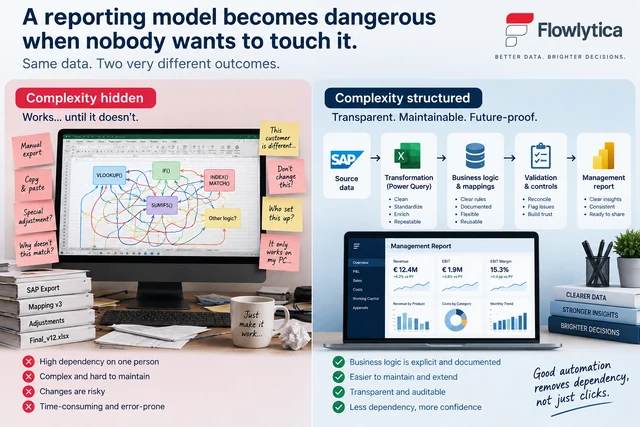
A reporting model becomes dangerous when nobody wants to touch it.

A model that only its creator understands is technical debt with a refresh button. Make complexity visible, structured and maintainable.

Read article →
A fragile reporting model with hidden complexity compared with a structured, traceable and maintainable reporting process.

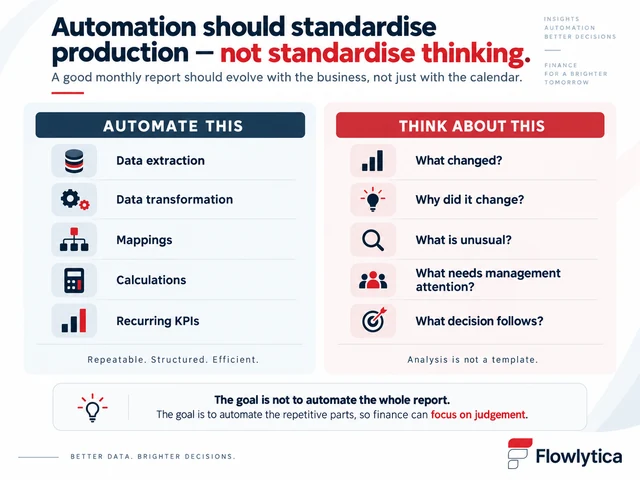
A good monthly report should make some of last month’s analysis obsolete.

Automate the recurring reporting work, then use the time saved to investigate what changed. A monthly report should evolve with the business.

Read article →
Automation should standardise production, not thinking: automate extraction and calculations, then investigate changes and decisions.

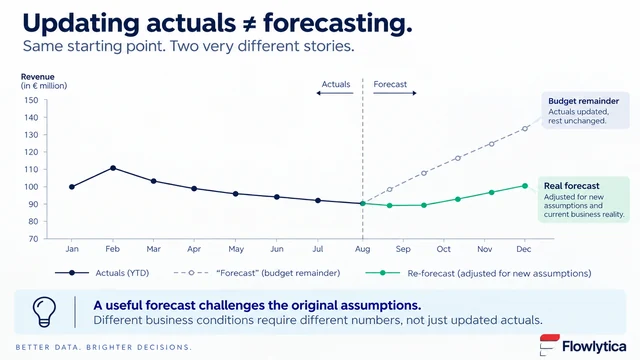
Your budget is not a forecast just because you update it every month.

Replacing budget months with actuals is not enough. A useful forecast challenges the operational assumptions behind the remaining year.

Read article →
Updating actuals is not forecasting: unchanged budget assumptions and a real reforecast produce different paths.

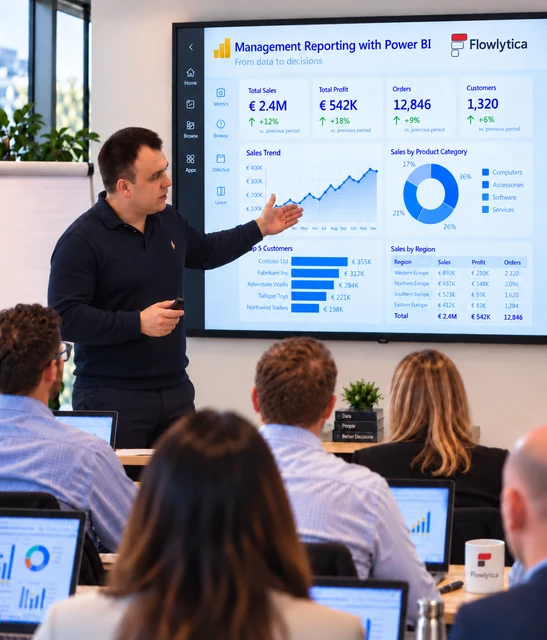
Most management reports contain far more information than management needs.

A reporting system should force choices: what changed, why it changed and whether management needs to act. More tabs are not an improvement.

Read article →
Flowlytica Power BI workshop on turning management reporting into better decisions.

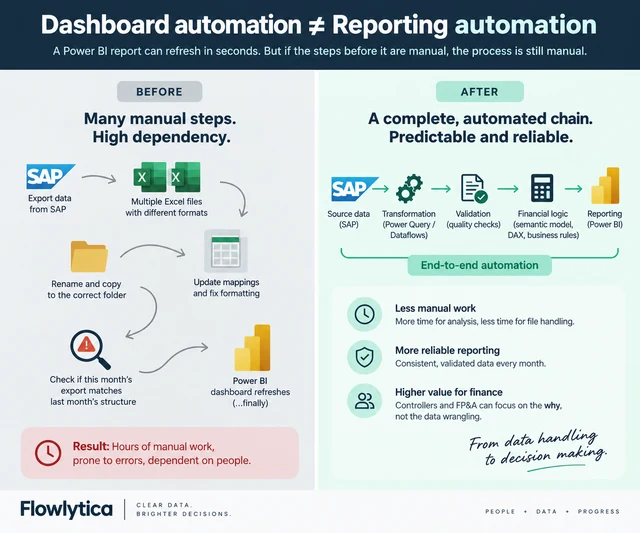
Dashboard automation is not reporting automation.

A dashboard can refresh in seconds while the process behind it still takes hours. The real opportunity is to automate the complete reporting chain.

Read article →
Dashboard automation is not reporting automation: manual SAP exports and spreadsheet handling compared with a complete automated reporting chain.

A Power BI dashboard is only as good as the process behind it.

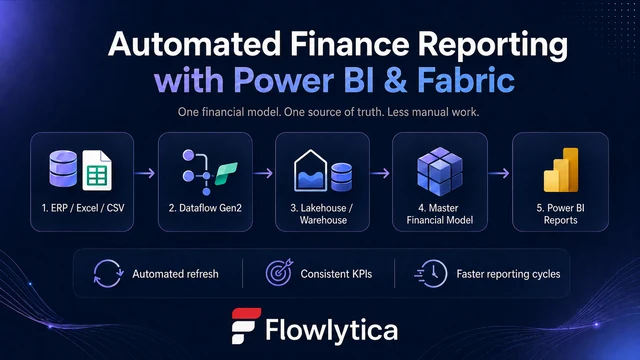
One reusable financial reporting model and an automated flow around it can serve P&L, budget, margin, cost centre and profitability reporting.

Read article →
Flowlytica automated finance reporting workflow: ERP, Excel and CSV through Dataflow Gen2, a Lakehouse or Warehouse, a financial model and Power BI reports.

Loyalty at Work Is Earned: Why a Good Manager Is Worth Staying For

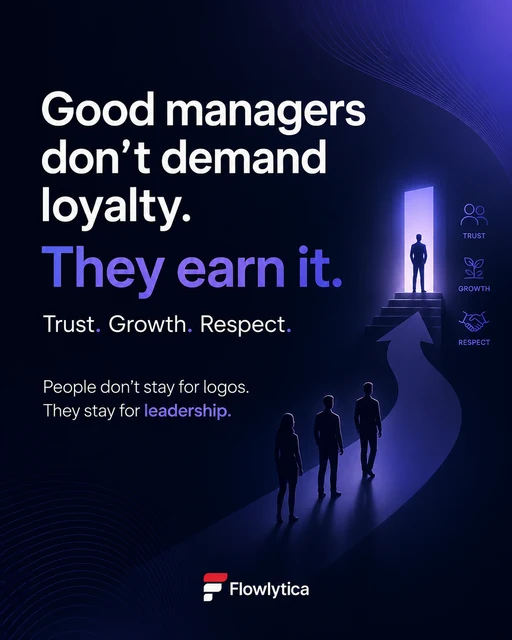
Workplace loyalty is often loyalty to the manager who creates the conditions in which people can do good work, grow and trust the relationship.

Read article →
Good managers don't demand loyalty. They earn it through trust, growth and respect.