
A reporting model becomes dangerous when nobody wants to touch it.
A model that only its creator understands is technical debt with a refresh button. Make complexity visible, structured and maintainable.
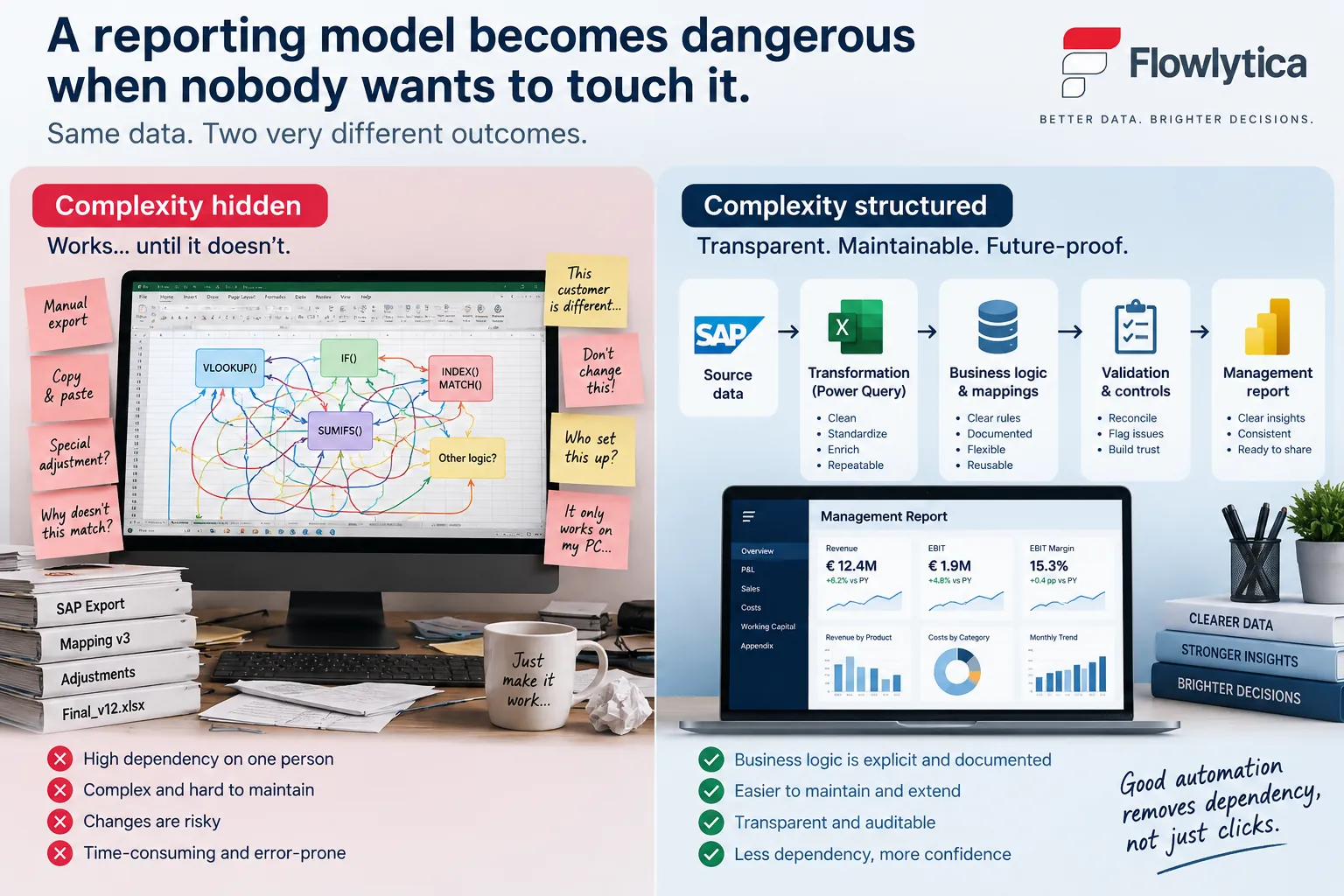
At first, complexity often looks like sophistication.
More formulas. More helper tabs. More measures. More exceptions. More logic added because “this customer is different” or “that account needs special treatment.”
Eventually, the model works — but only its creator understands why.
That is not a mature reporting system. It is technical debt with a refresh button.
When I build management reporting, I increasingly value boring architecture:
- Clear source tables.
- Explicit mappings.
- Reusable transformation steps.
- A documented calculation layer.
- Validation before presentation.
The goal is not to eliminate complexity. Finance is complex.
The goal is to make complexity visible, structured and maintainable.
A controller should be able to trace a number from the management report back through the calculation and transformation logic to its source — without reverse-engineering somebody else’s thought process.
Because the real test of a reporting system is not whether it works today.
It is whether someone else can safely change it tomorrow.
Could another controller maintain your reporting model next month?