
Dashboard automation is not reporting automation.
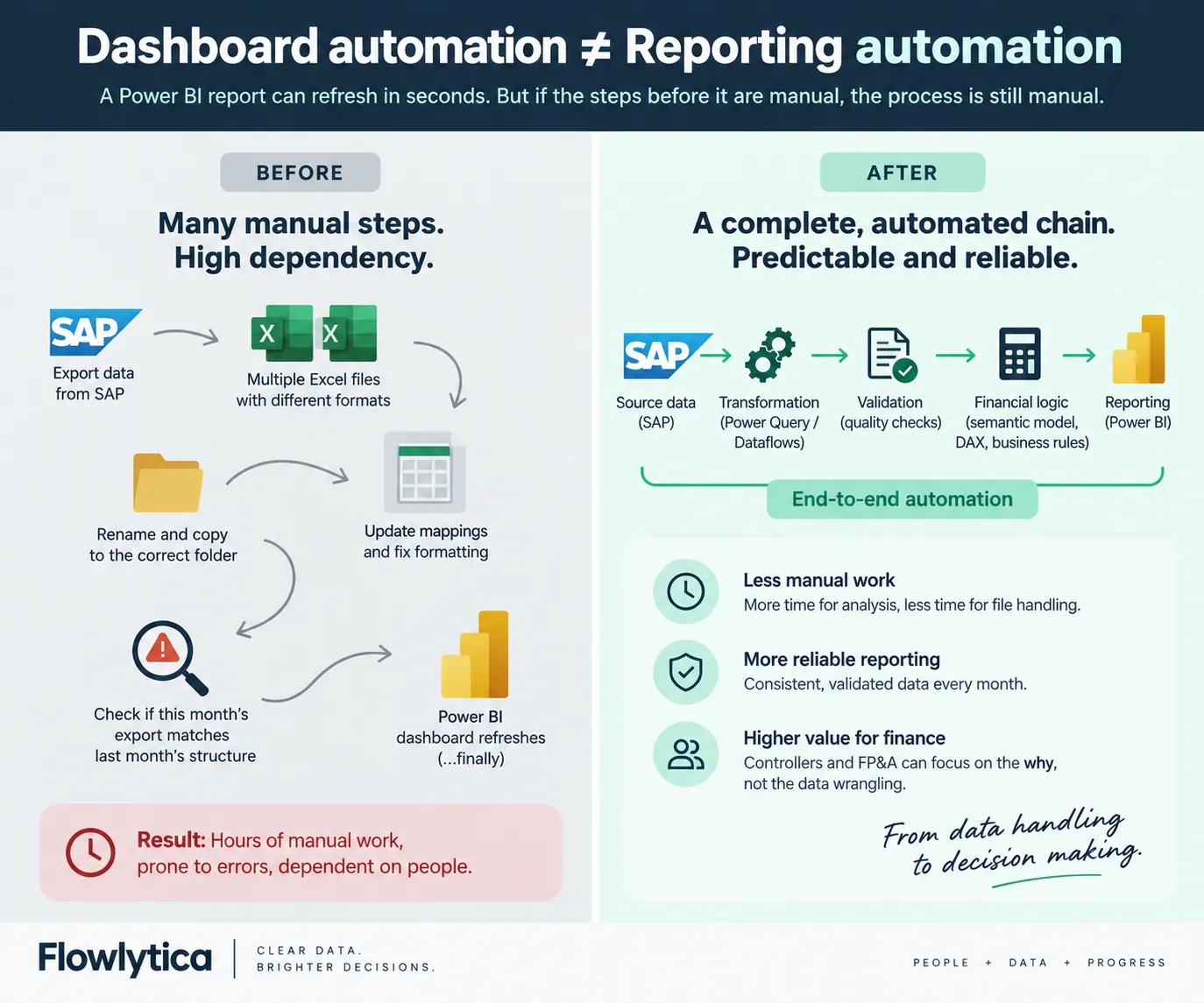
A dashboard can refresh in seconds while the process behind it still takes hours. The real opportunity is to automate the complete reporting chain.
If your monthly report requires someone who “knows which Excel file to use,” you don’t really have an automated reporting process.
You have a manual process with a few automated steps.
This distinction matters.
I often see reporting workflows where Power BI is the final output, but everything before it still depends on someone:
- exporting data from SAP,
- renaming files,
- copying them into the correct folder,
- updating mappings,
- fixing formatting differences,
- and checking whether this month’s export has the same structure as last month’s.
The dashboard may refresh in seconds.
The reporting process still takes hours.
The real opportunity in finance automation is therefore not simply replacing Excel charts with Power BI.
It is designing the complete chain so that repetitive work happens predictably:
Source data → transformation → validation → financial logic → reporting
And importantly, keeping human judgement where it actually adds value.
Controllers should spend their time asking why margin changed, not wondering why column G disappeared from this month’s SAP export.
How much of your “automated” reporting process still happens manually before the refresh button?