
Your budget is not a forecast just because you update it every month.
Replacing budget months with actuals is not enough. A useful forecast challenges the operational assumptions behind the remaining year.
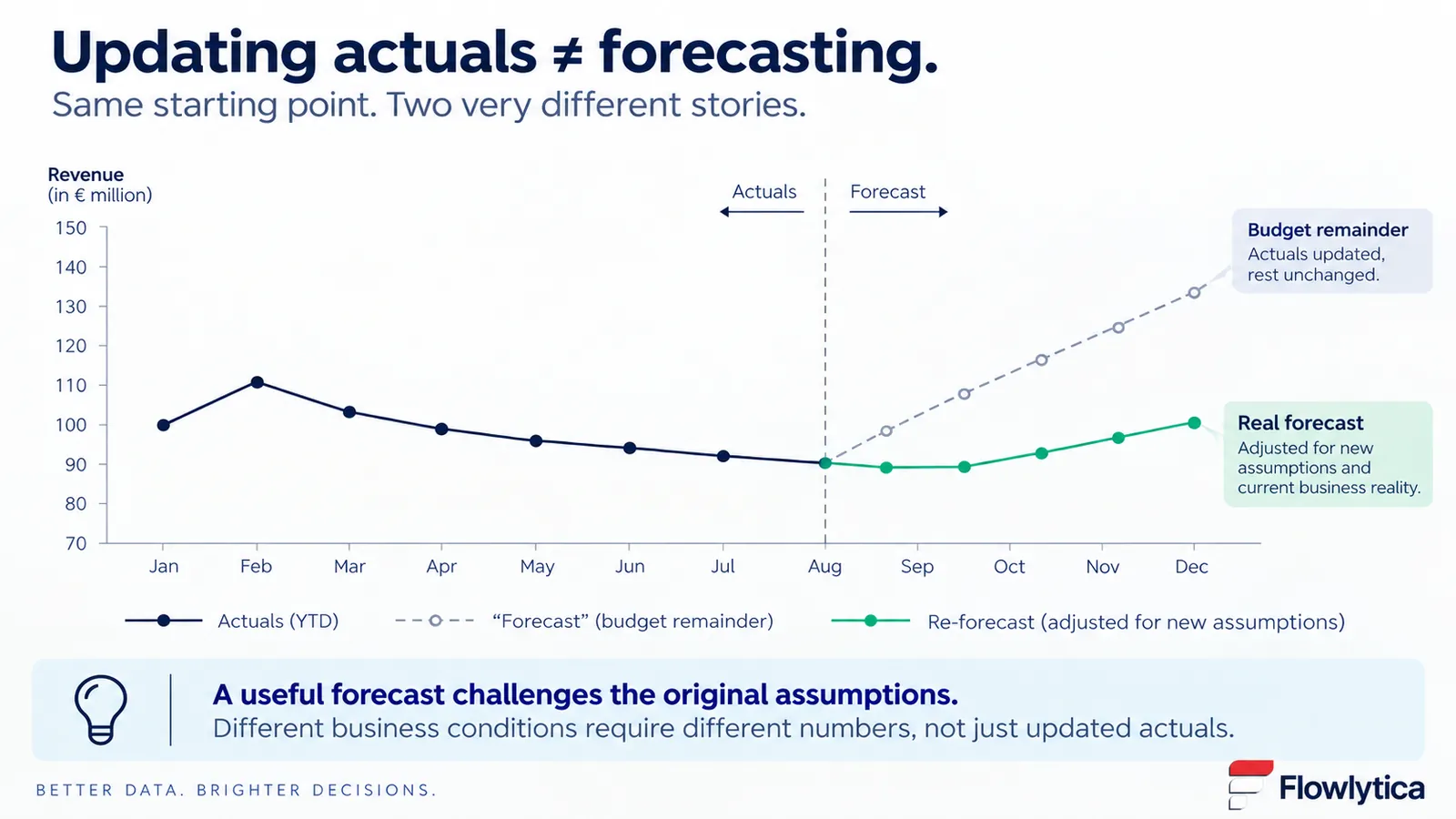
A surprising amount of FP&A still works like this:
Actuals arrive.
Finance replaces three months of budget with actuals.
The remaining nine months stay largely unchanged.
The file now says Latest Forecast.
But what exactly was forecast?
A useful forecast should force you to reconsider the assumptions that created the original budget.
If volume is 8% below plan, does the original year-end sales assumption still make sense?
If hiring is delayed by four months, why are personnel costs still following the budget curve?
If margins have deteriorated for three consecutive months, why does December magically return to budget?
Updating actuals is accounting.
Forecasting starts where the actuals end.
That means revisiting operational drivers, timing assumptions, known commitments and the relationship between what has already happened and what can realistically happen next.
The technical model can be Excel, Power BI or something far more sophisticated.
It cannot compensate for assumptions nobody is willing to challenge.
How much of your latest forecast was actually re-forecast?