Loyalty at Work Is Earned: Why a Good Manager Is Worth Staying For
Workplace loyalty is often loyalty to the manager who creates the conditions in which people can do good work, grow and trust the relationship.
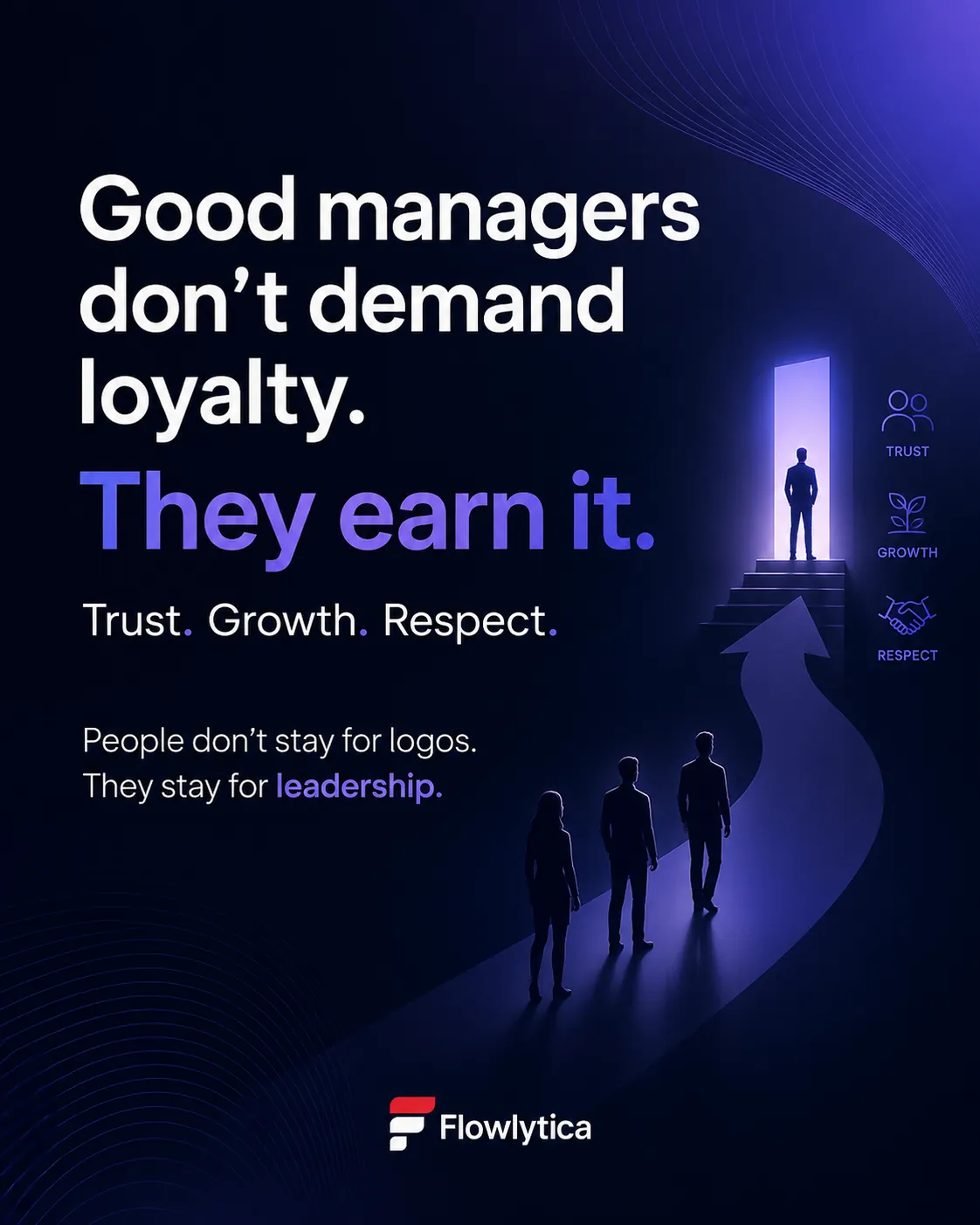
Most companies like to talk about loyalty. Employees are encouraged to identify with the company, believe in the mission and stay committed through difficult periods. But in reality, people rarely experience a company as an abstract institution. They experience it through their manager. A good manager can make an ordinary company feel like a great place to work. A poor manager can make an excellent company almost unbearable. That is why workplace loyalty is often less about loyalty to a logo and more about loyalty to the person who creates the environment in which you work. And in the right circumstances, staying loyal to a good manager can be a very rational career decision.
Loyalty should never be blind
There is an important distinction between loyalty and dependency. Nobody should remain in a role indefinitely simply because they feel they owe something to their employer or manager. If compensation is persistently unfair, development has stopped, the company is unstable or the role is harming your career, loyalty should not prevent you from moving on. But the opposite extreme can also be a mistake. Modern career advice often treats every job as a transaction: If another company offers 10% more, leave. Compensation matters enormously. But it is not the only component of the value of a job. A good manager can provide things that are surprisingly difficult to quantify until they disappear.
A good manager reduces career risk
The best managers create predictability. You know what is expected of you. You know where you stand. You receive feedback before problems become serious. You are given enough autonomy to do your work, but support is available when you need it. When mistakes happen, the first question is not: ‘Who can we blame?’ but: ‘What happened, and how do we fix it?’ That kind of environment has real economic value. A professional who spends less energy navigating politics and uncertainty can spend more energy producing results. Trust reduces organizational friction. And reducing friction is one of the most valuable things a manager can do.
Good managers compound your career capital
A strong manager does more than make the current job pleasant. They increase the value of the employee. They expose people to more difficult problems. They explain the reasoning behind decisions. They delegate meaningful responsibility instead of merely distributing tasks. They allow employees to present their own work. They defend good people when necessary. And, perhaps most importantly, they gradually give employees opportunities slightly beyond their current level of experience. Over several years, that can have a substantial effect on someone's career. The difference between two jobs is therefore not simply: €3,500 versus €3,800 per month. It may also be: Which environment will make me considerably more valuable three years from now? That calculation is much harder to put into an Excel model, but it is very real.
Trust has switching costs
Employees often underestimate the value of accumulated trust. Imagine that you have worked with the same manager for several years. They know how you work. They know your strengths. They understand where you need support. They know which assignments you can handle independently. And they trust your judgement. When you move to another company, much of that accumulated trust resets to zero. You have to establish your credibility again. You have to understand a new political environment. You have to learn how decisions are actually made. You need to discover which promises are real and which exist only in PowerPoint presentations. A salary increase can absolutely justify that move. But the cost of resetting professional trust should still be part of the equation.
The strongest loyalty is reciprocal
The healthiest form of employee loyalty is not: ‘I will never leave.’ It is: ‘You have treated me fairly, invested in me and supported my career, so I am not going to leave for a marginally better offer.’ That is a fundamentally different relationship. Good managers understand this. They do not demand loyalty. They create the conditions that make people want to stay. They advocate for fair compensation. They communicate honestly when circumstances are difficult. They give credit to the people doing the work. They protect their teams from unnecessary organizational noise. And when someone eventually receives an opportunity that is genuinely better for their career, a good manager often supports that move as well. Paradoxically, that behaviour tends to create even stronger loyalty.
Companies should pay attention to this
Employee retention is often treated as an HR problem. It is frequently a management problem. Companies can invest heavily in employer branding, benefits, engagement surveys and retention programs. But if an employee's direct manager consistently creates confusion, distrust or unnecessary pressure, those initiatives have limited value. The reverse is also true. A strong manager can retain talented employees even when the company cannot always offer the highest compensation in the market. That has direct financial consequences. Replacing experienced employees is expensive. Productivity drops during recruitment and onboarding. Institutional knowledge disappears. Existing employees absorb additional workload. And new hires need time before they reach the productivity of the people they replaced. Good management therefore isn't merely a cultural benefit. It can be a significant economic advantage.
When loyalty no longer makes sense
Loyalty should still have limits.
A move may be rational when:
- compensation is materially below market;
- you have stopped learning;
- there is no realistic progression;
- your manager cannot protect the team from a dysfunctional company;
- the role no longer fits your personal or professional priorities.
A good manager will usually understand those reasons. In fact, the best ones often recognize them before the employee does.
The manager may be the most important part of the employment contract
Employment contracts specify salary, working hours, holiday entitlement and other formal conditions. But a large part of the real working relationship never appears in the contract. Trust. Autonomy. Respect. Development. Psychological safety. Access to meaningful work. A manager has enormous influence over all of them. That is why changing jobs purely on the basis of compensation can sometimes be a mistake. A higher salary is visible immediately. The value of a good manager often becomes visible only after you no longer have one. Workplace loyalty should never be unconditional. But when a manager consistently treats people fairly, helps them grow and creates an environment in which they can do good work, staying loyal to that relationship can be far more than sentiment. It can be a rational investment in your career.
At Flowlytica, we usually talk about better data, reporting and financial decision-making. But the quality of management decisions ultimately depends on the people making them — and the environment in which those people work.